
Family-owned and locally operated by Nick Wilson • Licensed & insured • Serving Northern Virginia
Auto Charge Pros

PANELS & SERVICE CAPACITY / NORTHERN VIRGINIA

Electrical Panel Upgrades in Northern Virginia

An electrical panel upgrade should solve an actual electrical problem—insufficient capacity, damaged or obsolete equipment, inadequate breaker space, a planned service increase or another condition that requires the distribution system to be changed.

Auto Charge Pros evaluates the existing service, panel condition, available breaker space and household electrical demand before recommending an upgrade. Owner and Virginia Master Electrician Nick Wilson personally performs the electrical work, with no subcontractors.

Virginia Master Electrician Licensed & Insured Owner-Operated

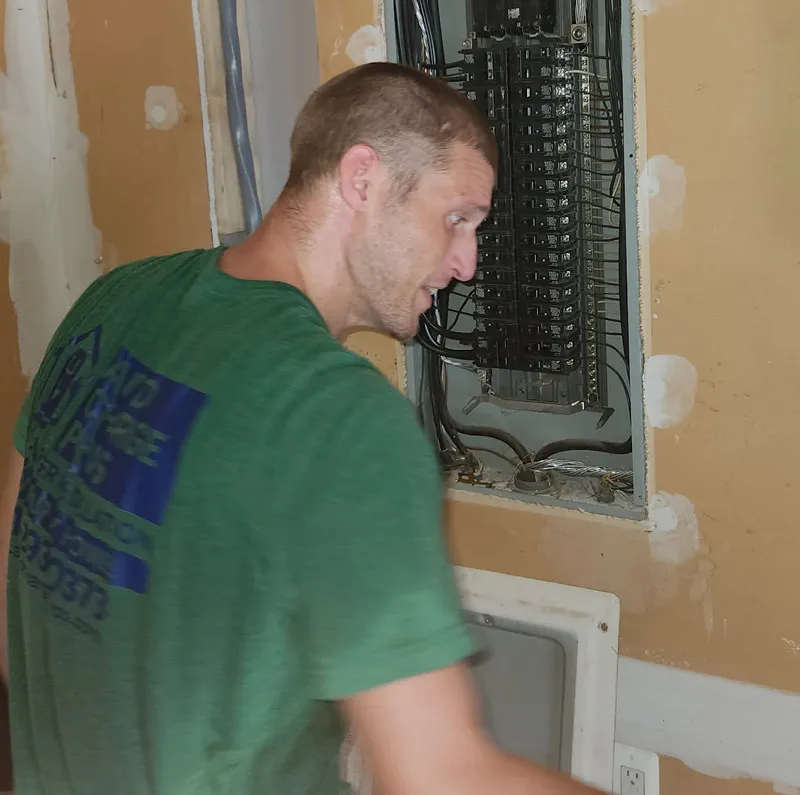
Nick Wilson performing electrical work at a residential panel
Owner-operated / electrical work by Nick Wilson

01 / panel vs service

Panel Replacement and Service Upgrade Are Not the Same Thing

Main service equipment is the service-side equipment that receives and disconnects utility power; its rating, conductors and configuration are part of the home's actual capacity. Downstream distribution equipment, including a subpanel, can add breaker space after that point without increasing the utility service.

01

Panel replacement

Replacing the existing panel or load center with new compatible equipment does not automatically increase the amperage available to the home. The existing service conductors, service equipment and utility supply still determine service capacity.

02

Service-capacity upgrade

Increasing a home from a smaller service to a larger service can involve the panel, service entrance conductors, meter/service equipment, disconnects, grounding and bonding, utility coordination and other project-specific work.

03

Subpanel

A subpanel can provide additional breaker spaces or distribute circuits to another portion of the home, but adding a subpanel does not create additional electrical service capacity by itself.

A new 200A-rated panel does not automatically turn a smaller service into a 200A service. The service conductors, service equipment and utility supply still matter.

02 / when an upgrade makes sense

When Should an Electrical Panel Be Replaced or Upgraded?

A panel or service upgrade may be appropriate when:

  • Existing equipment is damaged or deteriorated
  • There are signs of overheating or connection problems
  • Compatible breaker space is no longer available
  • The existing equipment cannot support planned electrical work
  • A larger electrical service is legitimately required
  • Major renovations change electrical demand
  • Distribution equipment must be reorganized or relocated
  • Utility/service equipment changes require new service equipment

Age alone does not automatically mean a panel needs replacement. Existing equipment should be evaluated for condition, compatibility and capacity first.

If a breaker, circuit or electrical symptom is the issue, see Electrical Troubleshooting or Circuit Breaker Repair.

03 / EV charging

An EV Charger Does Not Automatically Require a 200-Amp Upgrade

Adding an EV charger can create a significant continuous electrical load, but the correct first step is to evaluate the home's existing demand—not automatically replace the electrical service.

A home with available capacity may support Level 2 charging directly. When full-output charging is not appropriate, other options can include lower charging output, compatible EV load management or power sharing before a major service upgrade is recommended.

Calculate first. Upgrade only when necessary.

04 / load calculations

Available Breaker Space Is Not the Same as Available Capacity

A panel may have open breaker spaces while the electrical service is already carrying substantial household demand. The opposite can also occur: a panel may be physically full while the service still has available electrical capacity.

Auto Charge Pros evaluates the actual electrical loads and performs the appropriate residential load calculation when needed before recommending a larger service.

Examples of significant loads can include:

  • Electric heating
  • HVAC equipment
  • Water heating
  • Ranges and ovens
  • Clothes dryers
  • EV charging
  • Hot tubs and pools
  • Other major fixed electrical equipment

05 / service sizes

What Size Electrical Service Does the Home Actually Need?

Service size should be based on the dwelling's electrical demand and planned loads rather than simply choosing the largest panel available.

01

Existing 100A or 150A service

Some homes can continue to operate safely on their existing service depending on household demand and planned electrical additions. Others may genuinely require additional capacity.

02

200A service

A 200-amp residential service is common for modern homes but still does not provide unlimited capacity. Existing demand must be considered before large new loads are added.

03

Larger residential services

Homes with unusually high electrical demand can require larger or multiple service/distribution configurations. These projects require individual design and utility coordination.

06 / subpanels

Sometimes the Problem Is Breaker Space, Not Service Capacity

When the existing service has adequate capacity but the main panel lacks practical breaker space, a properly designed subpanel may be a better solution than replacing the entire electrical service.

A subpanel may make sense for:

  • Additional circuit space
  • Basement renovations
  • Garage circuits
  • Future residential electrical work
  • Organizing circuits in another portion of the home

A subpanel does not increase the utility service capacity. It provides additional distribution space within the capacity already available.

07 / what we inspect

What We Evaluate Before Recommending a Panel Upgrade

  • Service rating
  • Panel condition
  • Breaker compatibility
  • Available breaker spaces
  • Conductor condition where accessible
  • Grounding and bonding
  • Neutral/ground configuration
  • Signs of overheating or corrosion
  • Previous modifications
  • Household electrical demand
  • Planned future loads
  • Panel location and working clearances

The recommendation should come from the condition and electrical requirements of the home—not simply from the age printed on the equipment label.

08 / surge protection

Whole-Home Surge Protection and Service Equipment

Virginia currently uses the 2021 Virginia code cycle referencing the 2020 National Electrical Code. Under NEC 230.67, dwelling-unit services require Type 1 or Type 2 surge protection, and that requirement also applies when residential service equipment is replaced.

When the scope involves replacement of service equipment, the required surge-protection arrangement should be included in the project design.

A downstream subpanel replacement is not automatically a service-equipment replacement. See Whole-Home Surge Protection for related residential electrical work.

09 / grounding & bonding

Grounding and Bonding Are Part of the System

A panel project is not simply a matter of moving breakers into a new enclosure. Service equipment, grounding electrode connections, bonding and downstream neutral/ground separation must be evaluated according to the actual electrical configuration.

Where existing grounding or bonding deficiencies are found within the project scope, they should be identified before the work is finalized.

10 / panel replacement process

How We Plan an Electrical Panel Upgrade

01

Existing-System Review

Nick reviews the panel, service equipment, household demand and proposed new loads.

02

Load & Capacity Evaluation

Determine whether the project requires panel replacement, added distribution space or an actual service-capacity increase.

03

Project Design

Select appropriate listed equipment and determine breaker, grounding, surge-protection and service requirements.

04

Permit & Utility Coordination

Handle applicable electrical permitting and coordinate with the serving utility when meter/service work requires utility involvement.

05

Installation

Replace or install the applicable equipment, transfer/reterminate circuits, organize conductors and complete grounding/bonding work included in the scope.

06

Inspection & Commissioning

Coordinate applicable inspection, verify circuit identification and confirm the completed installation.

11 / utility coordination

When Does the Utility Need to Be Involved?

A panel-only project and a service-capacity upgrade are different projects. When work affects the utility meter, service conductors, service point or other utility-controlled equipment, coordination with the serving utility may be required for disconnect/reconnect, equipment approval or service changes.

The exact process depends on the property, service configuration and utility.

12 / permits

Electrical Panel Permits & Inspections in Northern Virginia

Panel replacements, new service equipment and service-capacity changes are subject to applicable electrical permitting and inspection requirements. The process varies by jurisdiction and project scope.

Incorporated towns and independent cities can follow different processes, so the actual property jurisdiction is confirmed before permit submission.

13 / clean panel work

A New Panel Should Be Organized and Understandable

A panel replacement is an opportunity to improve the organization and serviceability of the home's electrical distribution system. Conductors should be routed cleanly, terminations completed to equipment requirements and circuits identified clearly.

Where existing circuit conditions outside the agreed scope are discovered, those items should be documented and discussed rather than silently added to the project.

14 / drywall & finished areas

What if Access Around the Panel Is Needed?

Panel replacement or service work can require access around the existing equipment, service conductors or framing. When drywall access is expected, the likely openings are discussed before work begins whenever practical.

Where included in the written estimate, removed drywall can be fastened back after the required electrical work and inspection. Full finishing—including tape, compound and sanding—is available separately when requested.

15 / cost

What Does an Electrical Panel Upgrade Cost?

Panel projects vary widely because “panel upgrade” can describe very different work. A same-capacity panel replacement is not the same project as increasing the electrical service or redesigning a multi-panel residential system.

Cost can be affected by:

  • Existing panel/service configuration
  • Service amperage
  • Panel location
  • Number of circuits
  • Breaker requirements
  • Grounding and bonding
  • Surge protection
  • Service conductors
  • Meter/disconnect equipment
  • Utility coordination
  • Permitting
  • Drywall or exterior access
  • Electrical corrections included in the scope

Auto Charge Pros evaluates the existing system and provides a written project-specific estimate before work begins.

16 / questions homeowners ask

Electrical Panel Upgrade FAQs

Does adding an EV charger mean I need a 200A service?

No. Available electrical capacity should be evaluated first. A home may support the charger directly or through lower charging output or compatible load management without a full service upgrade.

Does installing a 200A panel make my service 200 amps?

Not by itself. Actual service capacity depends on the entire service equipment and conductor configuration, not only the rating printed on the replacement panel.

What is the difference between a panel replacement and service upgrade?

A panel replacement changes the distribution equipment. A service upgrade increases or modifies the electrical service supplying the home and can involve service conductors, meter/service equipment, disconnects, grounding and utility coordination.

Can a subpanel solve a full panel?

Sometimes. If the existing electrical service has adequate capacity but more breaker spaces are needed, a subpanel may provide additional distribution space without increasing service amperage.

Do older panels automatically need replacement?

No. Age is only one factor. Condition, compatibility, capacity and the planned electrical work should be evaluated before replacement is recommended.

Is surge protection required with a service replacement?

Under the 2020 NEC currently referenced by Virginia, dwelling services require Type 1 or Type 2 surge protection, including when service equipment is replaced. The exact installation depends on the service configuration.

Do you handle permits?

Yes. Auto Charge Pros can handle applicable electrical permitting when included in the project scope and coordinate utility involvement when required.

How long will the power be off?

Outage duration depends on the project, utility coordination and inspection process. The expected sequence is discussed before the work is scheduled rather than promising the same outage time for every panel project.

Is the work warranted?

Auto Charge Pros provides a one-year workmanship and installed-materials warranty on covered installation work. Manufacturer warranties may separately apply to electrical equipment.

17 / owner-operated

Your Panel Is Installed by the Electrician Responsible for the Project

Auto Charge Pros is owner-operated by Virginia Master Electrician Nick Wilson. Nick evaluates the existing electrical system, plans the scope and personally performs the electrical work.

No subcontractors.

About Auto Charge Pros →

READY WHEN YOU ARE

Have Your Electrical Panel Evaluated

Send us clear photos of the electrical panel with the door open, the main breaker or service equipment, and any new electrical loads you're planning. We can review the basic setup and determine whether the issue is breaker space, panel condition, available service capacity or a true need for an electrical service upgrade.