
01
Fixture support and box condition
Evaluate the existing electrical box and support before mounting a chandelier, pendant, fan/light or other substantial fixture.
RESIDENTIAL LIGHTING / NORTHERN VIRGINIA
Good residential lighting starts with more than choosing a fixture. The electrical box, circuit, switching, fixture rating, mounting location and wiring route all need to work with the home. Auto Charge Pros installs, replaces and troubleshoots residential lighting with careful planning around finished walls and ceilings.
Owner and Virginia Master Electrician Nick Wilson personally performs the electrical work, with no subcontractors.
Virginia Master Electrician • Licensed & Insured • Owner-Operated
What the work involves
The visible fixture is one part of a residential lighting project. The box, wiring, control and location all need to suit the equipment and the finished home.
01
Evaluate the existing electrical box and support before mounting a chandelier, pendant, fan/light or other substantial fixture.
02
Check the lamp, driver, dimmer, timer, motion control or smart switch as a connected system.
03
Plan practical routes through accessible framing and limit openings in finished walls and ceilings to what the wiring requires.
01 / indoor lighting
New or replacement recessed lighting planned around ceiling construction, joist location, insulation, switching and fixture listing.
Fixture installation with appropriate electrical-box and structural support for the actual equipment and mounting location.
Replacement and installation of flush-mount, semi-flush, wall-mounted and other residential luminaires.
Lighting planned around available power, switching, fixture location and the finished space.
Fixture and lamp upgrades using compatible listed equipment rather than assuming every existing dimmer or control works correctly with every LED product.
Fan/light equipment can be installed when the electrical box, support, wiring and controls are appropriate for the equipment.
02 / recessed lighting
Recessed lighting installation should account for framing, insulation, ceiling depth, fixture listing and access above the ceiling.
Type IC recessed luminaires are designed for installations where insulation can contact or cover the luminaire. Non-IC equipment has different clearance requirements and should not simply be buried in insulation.
03 / outdoor lighting
Wall-mounted and ceiling-mounted exterior fixtures installed with equipment appropriate for the location.
Lighting designed around visibility, mounting location, switching and practical coverage of the area.
Motion-controlled fixtures installed where the sensor location and coverage make sense for the property.
Exterior lighting planned for the actual weather exposure, mounting surface and electrical route.
Compatible line-voltage or low-voltage lighting systems can be evaluated according to the equipment and project scope.
04 / damp & wet locations
A covered porch and an exposed exterior wall do not create the same environmental conditions. Lighting equipment should be listed for the damp or wet location in which it is installed.
A location protected from direct weather but subject to moisture, such as some covered porches.
A location exposed to weather or saturation with water.
The fixture, box, connection method and mounting arrangement should be appropriate for the actual location and manufacturer instructions.
Do not use an indoor-only fixture outdoors simply because it physically fits.
05 / switches & dimmers
Lighting problems are often caused by an incompatible control rather than the fixture itself. Dimmer, timer, motion-control and smart-switch compatibility should be evaluated along with the connected lighting load.
Need switch or receptacle work too? See Outlets & Switches.
06 / LED flicker
LED flickering, buzzing, delayed startup or poor dimming range can have several causes. The issue may involve the lamp or fixture, LED driver, dimmer compatibility, loose connections, voltage conditions or another circuit problem.
Replacing the light fixture without evaluating the control and circuit can leave the original problem unresolved.
For diagnostic work, see Electrical Troubleshooting & Repair.
07 / new lighting vs replacement
A compatible replacement at an existing electrical box can often use the existing circuit and location after the box, wiring and support are evaluated.
Adding lighting where no fixture exists can require new cable, boxes, switching, circuit evaluation and access through finished walls or ceilings.
The installation scope should be based on the actual wiring required—not simply the number of fixtures being installed.
08 / fixture support
A chandelier, ceiling fan or other substantial fixture should not be supported only by drywall or by an electrical box that is not designed for the equipment.
The existing electrical box and support method are evaluated before installation. If additional structural support or an appropriate listed box is required, that work should be included in the installation plan.
09 / lighting troubleshooting
A light that will not turn on, flickers, trips a breaker or behaves intermittently can involve the fixture, lamp, switch, dimmer, wiring, connection, breaker or another circuit condition.
When symptoms indicate a larger electrical issue, Auto Charge Pros diagnoses the problem before replacing the fixture simply because it is the most visible component.
Electrical Troubleshooting & Repair and Circuit Breaker Repair are available when the symptom points beyond the fixture.
10 / exterior lighting & GFCI
Do not make the blanket statement that every exterior lighting circuit requires GFCI protection.
GFCI requirements depend on the actual equipment, location, circuit and applicable code provisions. Exterior receptacles and certain specific outdoor electrical equipment have requirements that are different from ordinary permanently connected lighting outlets.
Auto Charge Pros evaluates the actual circuit and project rather than applying receptacle requirements to every exterior light fixture.
11 / finished homes
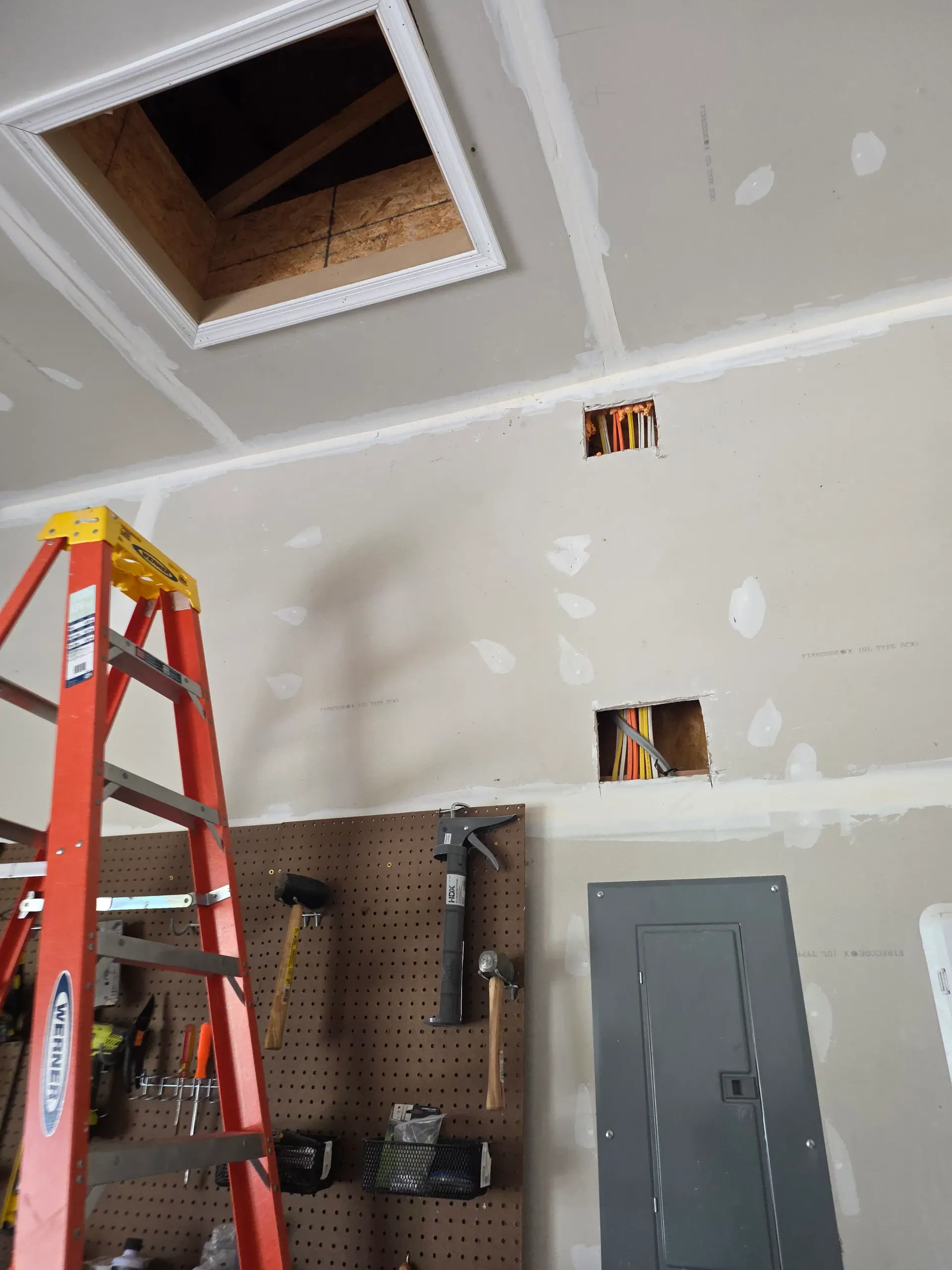
New recessed lighting, pendant locations and additional switching can require wiring through completed ceilings and walls. The route should be planned around joist direction, accessible attic or unfinished areas and the intended fixture layout before openings are made.
When practical, Auto Charge Pros uses accessible framing paths and keeps drywall access limited to what the wiring route requires.
Where included in the written estimate, removed drywall can be fastened back after the required electrical work and inspection. Full finishing—including tape, compound and sanding—is available separately when requested.
12 / remodels
Lighting is easiest to plan before walls and ceilings are closed. During a remodel, fixture locations, switching, dedicated circuits, dimmers and future controls can be coordinated with the electrical rough-in instead of being added after the space is finished.
13 / installation process
01
Discuss fixture type, room use, switching, brightness goals and equipment being installed.
02
Evaluate the existing circuit, boxes, controls and available wiring.
03
Determine fixture locations, switching and practical wiring access.
04
Confirm fixture rating, dimmer/control compatibility and indoor/outdoor listing.
05
Nick completes the electrical installation and tests fixture and control operation.
06
Coordinate required permitting and complete any restoration included in the written estimate.
14 / permits
Permit requirements depend on the jurisdiction and work being performed. A direct like-for-like fixture replacement may be treated differently from adding new fixtures, relocating electrical boxes, installing new branch-circuit wiring or completing a larger remodel.
When permitting is required and included in the project scope, Auto Charge Pros handles the applicable electrical permit process and coordinates inspection.
15 / cost
Lighting costs vary because replacing one accessible fixture is very different from adding multiple new recessed lights through a finished ceiling or installing exterior lighting with new wiring.
Auto Charge Pros reviews the actual installation and provides a written estimate before work begins.
16 / questions homeowners ask
Yes, when the ceiling construction and wiring route allow it. Joist direction, insulation, fixture type and access determine how the installation is planned and whether drywall openings are required.
A Type IC luminaire is listed for installation where insulation can contact or cover the fixture. Non-IC fixtures have different clearance requirements and should be installed according to their listing.
Yes. The existing electrical box and support are evaluated to make sure they are appropriate for the fixture being installed.
Possible causes include dimmer and LED incompatibility, driver characteristics, wiring conditions or a broader electrical issue. The control and lighting equipment should be evaluated together.
Yes, when the existing wiring, connected load and selected control are compatible. Some smart controls require a neutral conductor or other specific wiring conditions.
Yes. Exterior fixtures must be appropriate for the actual damp or wet location and installed with suitable electrical equipment and connections.
No blanket rule should be applied to every exterior luminaire. GFCI requirements depend on the circuit, equipment, location and applicable code provisions.
It depends on the scope and jurisdiction. Direct like-for-like replacement may be treated differently from adding new wiring, relocating fixtures or creating new circuits.
Drywall access restoration depends on the written project scope. Where included in the written estimate, removed drywall can be fastened back after the required electrical work and inspection. Full finishing—including tape, compound and sanding—is available separately when requested.
Auto Charge Pros provides a one-year workmanship and installed-materials warranty on covered installation work. Fixture manufacturer warranties may separately apply.
17 / owner-operated

Auto Charge Pros is owner-operated by Virginia Master Electrician Nick Wilson. Nick plans the electrical work and personally performs the installation.
No subcontractors.
18 / related services
19 / service area
Auto Charge Pros is based in Aldie, Virginia and serves homeowners across the region.
READY WHEN YOU ARE
Send us photos of the room or exterior area, the existing fixture or proposed location, and the lighting equipment you are considering. For new recessed lighting or additional fixture locations, wider photos of the ceiling and surrounding space help us evaluate the likely wiring route.