Family-owned and locally operated by Nick Wilson • Licensed & insured • Serving Northern Virginia
Auto Charge Pros

RESIDENTIAL EV CHARGING / NORTHERN VIRGINIA

EV Charger Installation in Northern Virginia

Professional Level 2 EV charger installation planned around your home's electrical capacity, charger requirements, parking location and the cleanest practical wiring route. Auto Charge Pros handles everything from panel evaluation and circuit planning to installation, applicable permitting, testing and inspection coordination.

Owner and Virginia Master Electrician Nick Wilson personally performs the electrical work, with no subcontractors.

Tesla Certified Installer Virginia Master Electrician Licensed & Insured 1-Year Workmanship Warranty

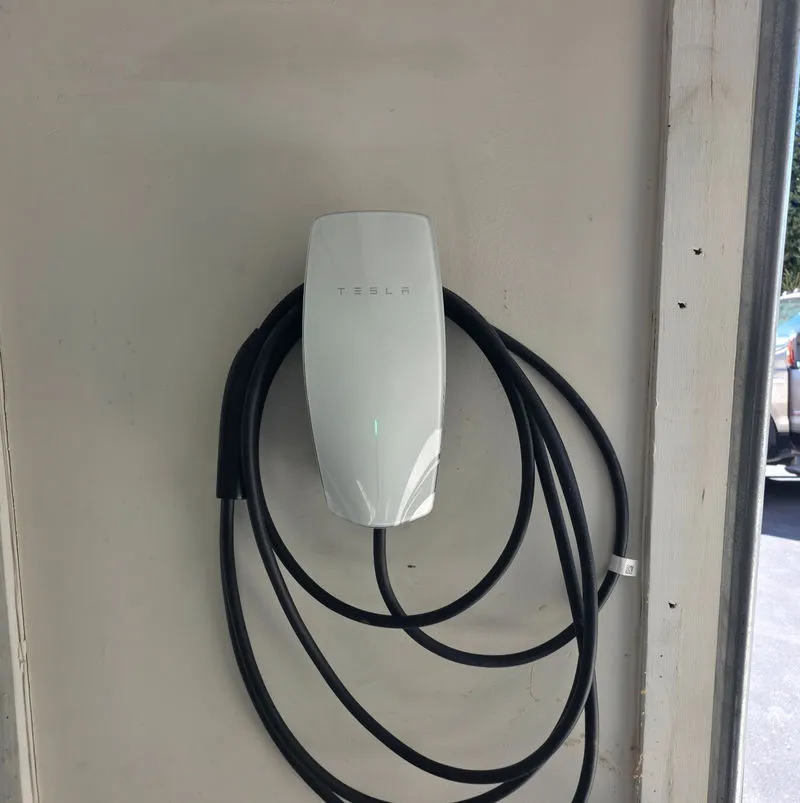
Completed Tesla Wall Connector mounted on a residential garage wall
Completed home installation / Tesla Wall Connector

01 / level 2 charging

Level 2 Home Charging Built Around Your Electrical System

A home EV charger is a substantial electrical load that can operate continuously for hours. The installation should therefore begin with the home's electrical system—not simply the charger mounted on the wall.

Auto Charge Pros evaluates the electrical panel, available service capacity, charger specifications, desired charging output, wiring distance and installation location before recommending the dedicated circuit.

The goal is to provide the charging speed the home can safely support without automatically selling an unnecessary panel or service upgrade.

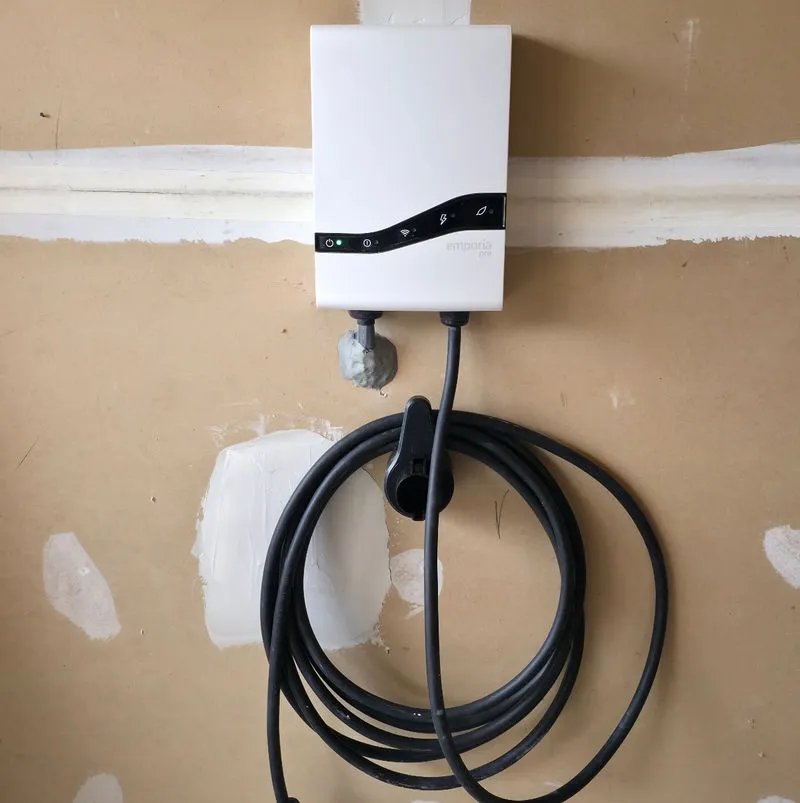
Completed hardwired Emporia Level 2 charger mounted on a residential wall

02 / charging options

EV Charging Installation Options

01

HARDWIRED LEVEL 2 CHARGING

For compatible permanent installations, hardwired charging is generally Auto Charge Pros' preferred method. This option can include Tesla Wall Connector, Tesla Universal Wall Connector, Emporia, ChargePoint, BMW, Rivian-compatible charging equipment and other listed Level 2 chargers. 48A charging typically requires an appropriately sized dedicated 60A circuit when the charger, wiring method and available electrical capacity support it.
02

NEMA 14-50

A plug-in charging option on a dedicated four-wire circuit. A 50A circuit supports maximum 40A continuous EV charging. GFCI protection where required, a quality receptacle and sound terminations matter for a continuous load. Hardwired charging is generally preferred for a permanent high-output installation.

03

NEMA 6-50

A 240V receptacle without a neutral conductor. This option is only appropriate when the specific charging equipment is designed for a NEMA 6-50 connection; equipment compatibility and the electrical capacity are confirmed before installation.

03 / 48-amp charging

What Does It Take to Charge at 48 Amps?

Many hardwired Level 2 chargers can provide up to 48 amps of continuous charging when installed on an appropriately designed 60-amp dedicated circuit and when the home's electrical system has sufficient available capacity.

EV charging is treated as a continuous electrical load, so the circuit must be sized accordingly. A 48-amp charging load requires a circuit sized for at least 125% of that continuous load.

Maximum charging output should not be selected simply because the charger supports it. The home's available electrical capacity must also support the additional load.

04 / electrical capacity

Your Main Breaker Doesn't Tell the Whole Story

A 200-amp main breaker or several unused breaker spaces do not automatically mean another 60-amp circuit should be added. Existing household electrical demand must also be evaluated.

Potential loads can include:

  • HVAC equipment
  • Electric heat
  • Water heating
  • Electric cooking
  • Clothes dryers
  • Hot tubs
  • Pool equipment
  • Additional dwelling loads
  • Other major electrical equipment

Auto Charge Pros evaluates available capacity and completes the appropriate load calculation when required before recommending charger output.

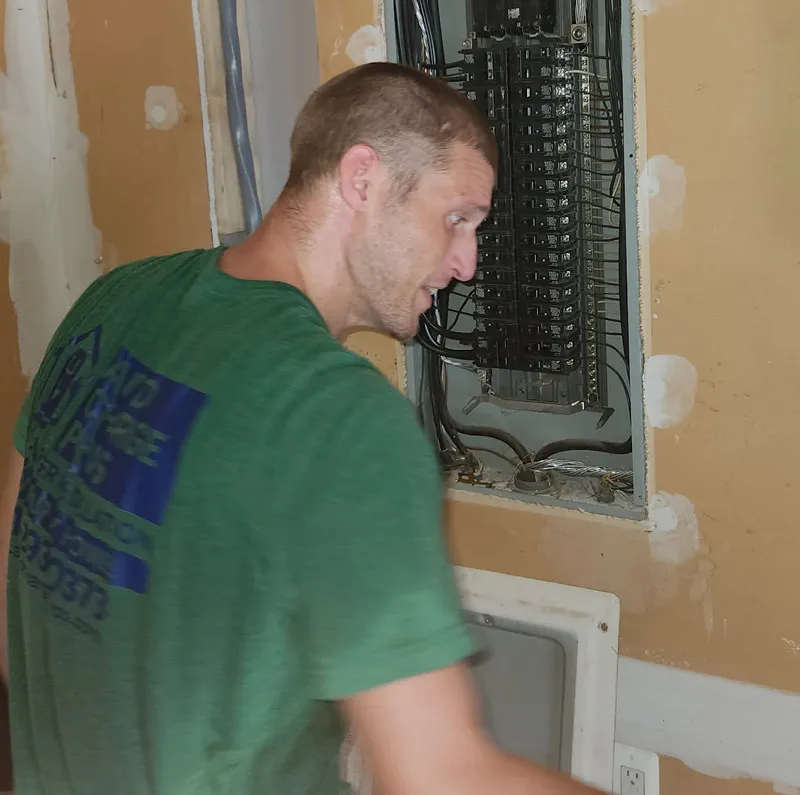
Technician working at an open residential electrical panel during EV charger capacity evaluation

REDUCED CHARGING OUTPUT

Many chargers can operate on a lower circuit rating while still providing substantially faster charging than a standard 120-volt outlet.

LOAD MANAGEMENT

Compatible listed EV load-management equipment can allow charging to operate within available service capacity when appropriate.

POWER SHARING

Compatible chargers can share available charging capacity when two EV chargers are installed at the same property.

ELECTRICAL UPGRADES

Panel, feeder or service improvements are recommended when the existing system genuinely requires them.

Calculate first. Upgrade only when necessary.

05 / Tesla charging

Tesla Wall Connector Installation

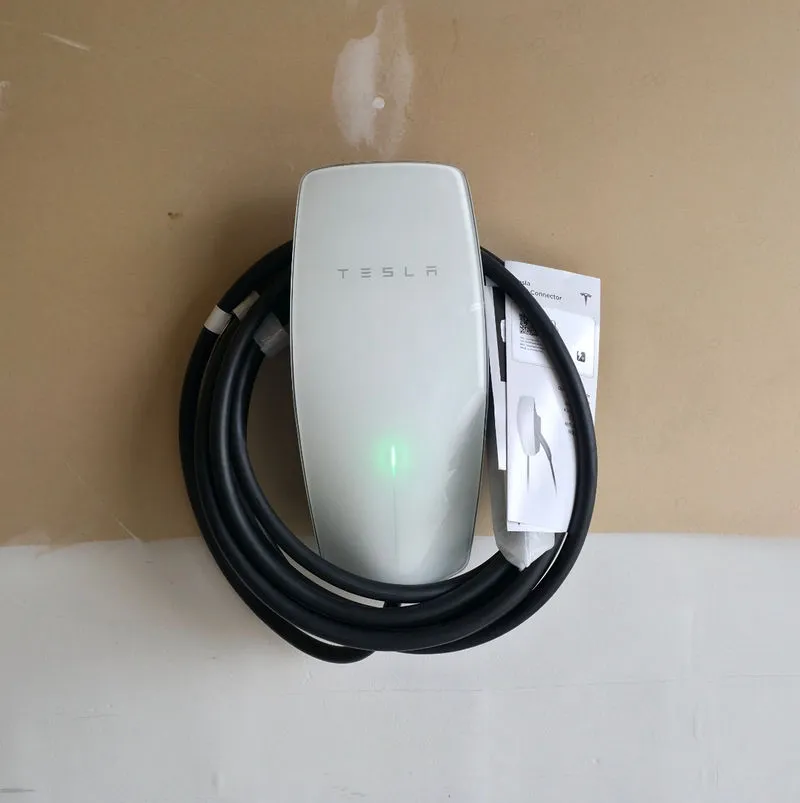
Auto Charge Pros is a Tesla Certified Installer providing Tesla Wall Connector and Universal Wall Connector installation throughout Northern Virginia.

We evaluate available capacity, determine the appropriate dedicated circuit, plan the wiring route and position the Wall Connector around the vehicle's normal parking location and cable reach.

Tesla Wall Connector mounted on a residential wall with its cable coiled below

Compatible Tesla installations may also support:

  • Reduced charging output
  • Multiple Wall Connectors with power sharing
  • Compatible power-management configurations
  • Indoor or outdoor installation

Tesla Certified Installer and Virginia Master Electrician

Detailed Tesla installation planning →

06 / other chargers

Chargers for Tesla, Rivian, Ford, Hyundai, Kia, BMW & More

Auto Charge Pros installs compatible Level 2 charging equipment for most major electric vehicles. The electrical installation is designed around the charger rather than assuming every brand has identical circuit or configuration requirements.

That includes Tesla, ChargePoint, Emporia, BMW, GM, Rivian-compatible equipment, Ford-compatible equipment, Wallbox and other listed Level 2 charging equipment.

For Tesla equipment, review the Tesla Wall Connector Installation section.

Chargers We Recommend →

07 / wiring routes

The Wiring Route Matters as Much as the Charger

The charger mounted on the wall is only the visible portion of the installation. The circuit may need to travel through a basement, garage ceiling, attic, finished wall, exterior area or another portion of the home before reaching the charging location.

When practical, Auto Charge Pros prefers concealed wiring through accessible framing and unfinished areas instead of automatically running exposed conduit across finished surfaces.

Before installation, we evaluate:

  • Panel-to-charger distance
  • Framing direction
  • Finished ceilings and walls
  • Accessible unfinished areas
  • Garage transitions
  • Outdoor sections
  • Charger location
  • Parking position
  • Cable reach

Expected drywall access is discussed before work begins whenever practical.

08 / drywall

What Happens if Drywall Needs to Be Opened?

Concealed wiring sometimes requires controlled access openings in finished walls or ceilings. We plan those openings around the wiring route and keep them as practical as possible.

Where included in the written estimate, removed drywall can be fastened back after the required electrical work and inspection. Full finishing—including tape, compound and sanding—is available separately when requested.

09 / garage & outdoor charging

Garage, Driveway and Outdoor EV Charger Installation

Garage Charging

Charger placement is planned around parking orientation, charge-port location, cable reach, garage doors and normal movement through the space.

Outdoor Charging

Outdoor installations require appropriately rated equipment and wiring methods suitable for weather exposure and physical conditions.

Detached Garages

Detached-garage installations require evaluation of the existing feeder or electrical supply, connected loads, available capacity, circuit distance and wiring route before another significant load is added.

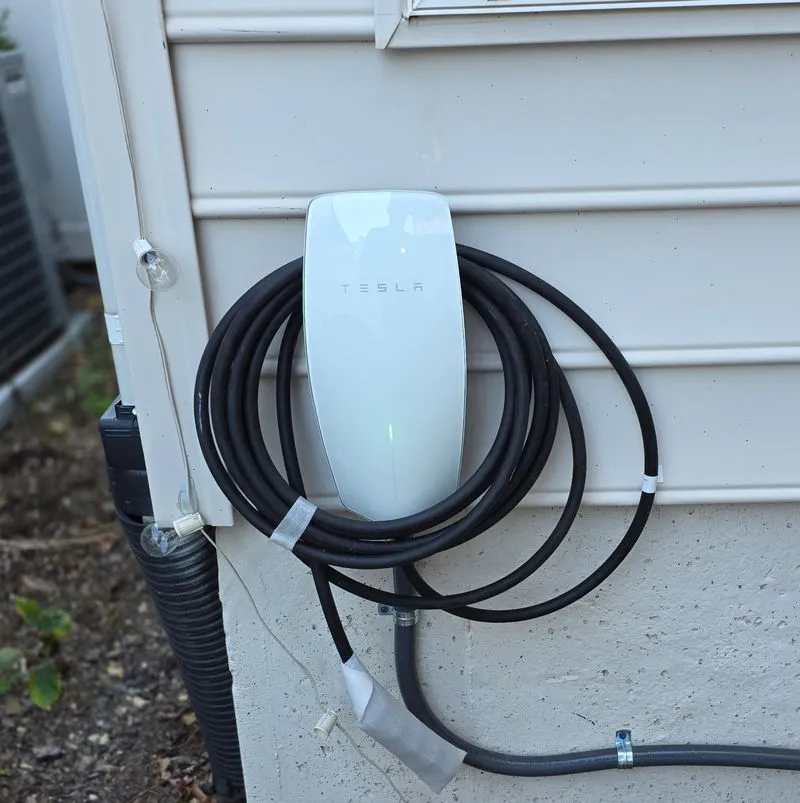
Tesla Wall Connector mounted on an exterior residential wall

10 / installation process

From Panel Review to Final Inspection

01

PROJECT REVIEW

Send the charger or vehicle model, a photo of the electrical panel with the door open, and photos of the proposed charging location.

02

ELECTRICAL CAPACITY

We review available service capacity, existing electrical demand and the charging output being requested.

03

ROUTE & PLACEMENT

We plan the practical wiring route and charger location and identify expected drywall or exterior access.

04

WRITTEN ESTIMATE

The estimate identifies the circuit, installation route, charger work, permitting and any restoration or additional electrical work included in the scope.

05

INSTALLATION

Nick installs the dedicated circuit and hardwired charger or approved charging receptacle, configures supported equipment settings and tests the installation.

06

PERMIT & INSPECTION

Auto Charge Pros coordinates applicable permitting and inspection requirements according to the project’s jurisdiction and written scope.

11 / permits by jurisdiction

EV Charger Permits Across Northern Virginia

LOUDOUN COUNTY

Permit and inspection requirements vary by jurisdiction and project scope. Auto Charge Pros confirms the applicable process for the actual property and work being performed.

Loudoun County EV Charger Installation →

FAIRFAX COUNTY

Permit and inspection requirements vary by jurisdiction and project scope. Auto Charge Pros confirms the applicable process for the actual property and work being performed. Applicable Fairfax County projects use the PLUS permitting system.

Fairfax County EV Charger Installation →

PRINCE WILLIAM COUNTY

Prince William County has specific EV charger submittal requirements. For residential charging systems greater than 20 amps, its current requirements include a residential load calculation with the EV load included at 125% of nameplate rating.

Prince William County EV Charger Installation →

Incorporated towns and independent cities can have different requirements. Auto Charge Pros confirms the actual jurisdiction before permit submission.

12 / cost

What Does EV Charger Installation Cost in Northern Virginia?

Installation cost depends much more on the electrical system and wiring route than on simply mounting the charger.

Factors can include:

  • Available electrical capacity
  • Panel location
  • Circuit distance
  • Charger output
  • Finished-wall or ceiling access
  • Indoor vs. outdoor location
  • Conduit
  • Underground routing when applicable
  • Detached structures
  • Load management
  • Electrical corrections
  • Permitting
  • Drywall restoration

A charger mounted beside a suitable garage panel can be a very different project from a concealed basement-to-garage circuit or a charger serving an outdoor or detached parking location.

Auto Charge Pros reviews the project and provides a written installation-specific estimate before work begins.

13 / why Auto Charge Pros

EV Charging Is Our Specialty

As an EV charger electrician serving Northern Virginia, Auto Charge Pros keeps the electrical evaluation, installation plan and field work connected. Nick Wilson personally evaluates and performs the work.

Owner-Performed Work

Nick Wilson personally evaluates and performs the electrical installation.

Master Electrician Experience

Electrical capacity, circuit requirements and existing conditions are evaluated before recommendations are made.

Tesla Certified Installer

Certified installation support for Tesla Wall Connector and Universal Wall Connector equipment.

No Automatic Upgrades

Panel or service upgrades are recommended when the electrical system requires them—not simply because an EV charger is being added.

About Auto Charge Pros →

14 / reviews

What Northern Virginia EV Charger Customers Say

“The owner, Nick did a great job installing my electric car charger in my garage. I highly recommend him. His price was the best and even included the county inspection fee.”

Michael Kibler / Google review

“Auto Charge Pros did an amazing job installing my hardwired EV charger! Nick was professional, knowledgeable, and handled everything — from pulling the county permit to completing the inspection.”

Grant Park / Google review

“Nick at Auto Charge Pros was absolutely fantastic to work with. From start to finish, he made the entire process of installing my Level 2 EV charger incredibly easy. He handled all of the county permits and inspections.”

Aaron Savage / Google review

16 / questions homeowners ask

Northern Virginia EV Charger Installation FAQs

What size circuit do I need for a 48-amp charger?

A 48-amp continuous charging load is typically installed on an appropriately designed 60-amp dedicated circuit. Available electrical capacity must also support the load before that output is recommended.

Does my home need a 200-amp service?

Not necessarily. Service size alone does not determine whether EV charging can be added. Existing household electrical demand and the requested charging output must also be evaluated.

Do I need a panel upgrade?

Not automatically. Reduced charging output or compatible load-management equipment may be practical alternatives when capacity is limited.

Is hardwired charging better than NEMA 14-50?

For permanent high-output charging, hardwired equipment is generally our preferred method because it eliminates the plug-and-receptacle connection. An EV-rated receptacle can still be appropriate for compatible plug-in equipment.

Can you install a charger when my panel is in the basement?

Yes. Basement-to-garage installations are common. The route depends on framing, finished surfaces, available unfinished space and garage location.

Can you install an outdoor charger?

Yes. Outdoor charging requires equipment and wiring methods rated for the location and appropriate physical protection.

Can you install two EV chargers?

Yes, when the electrical system and charging equipment support the planned configuration. Compatible power-sharing or load-management solutions can sometimes reduce the additional service capacity required.

Do you handle permits?

Yes. Auto Charge Pros can handle applicable electrical permitting and coordinate inspection when permitting is included in the installation scope. Requirements vary by jurisdiction and project.

Do you install Tesla Wall Connectors?

Yes. Auto Charge Pros is a Tesla Certified Installer providing Tesla Wall Connector and Universal Wall Connector installation throughout Northern Virginia.

Is the installation warranted?

Auto Charge Pros provides a one-year workmanship and installed-materials warranty on covered installation work. Charging equipment may carry a separate manufacturer warranty.

Have another question? Visit the EV Charger FAQ page for more homeowner guidance.

READY WHEN YOU ARE

Plan Your Home EV Charger Installation

Send us a photo of your electrical panel with the door open, a photo of the proposed charging location, and the charger or vehicle model. We can review the basic setup and determine whether the project can begin with a virtual estimate or whether an on-site visit would be more appropriate.