
Prince William County / local service
EV Charger Installation & Electrician in Nokesville, Virginia
EV charger installation in Nokesville can involve very different planning than a typical attached-garage installation. Larger lots, detached garages, workshops and accessory structures, long driveways, and outdoor parking can increase circuit distance and make conductor sizing, routing method, and voltage drop more important parts of the design. Auto Charge Pros evaluates the panel location, electrical capacity, charger location, actual circuit distance, indoor versus outdoor routing, detached structures, underground portions of the route, charger output, conductor sizing, permits, and inspections before work begins. Owner and Virginia Master Electrician Nick Wilson personally performs the electrical work. No subcontractors.
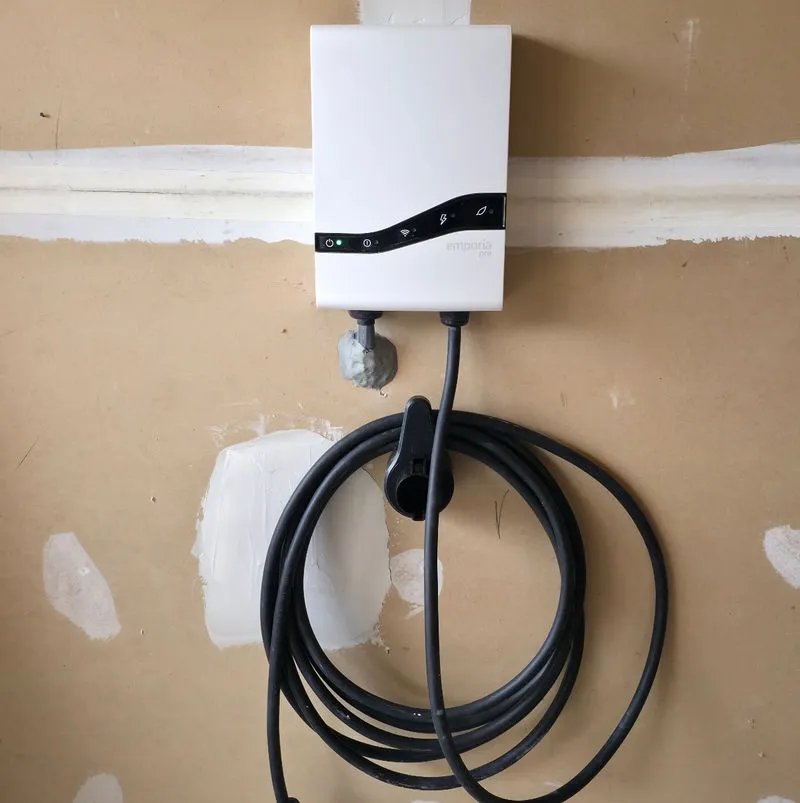
01 / long-run design
Planning EV Charger Circuits for Larger Nokesville Properties
A charger 10 feet from a garage panel is a very different design than one across a large attached garage, at the opposite end of the house, in a detached garage, beside a driveway, at a workshop or accessory structure, or at another distant parking location. Long circuits require more than deciding what breaker fits.
For longer EV charging circuits, Auto Charge Pros considers circuit length and voltage drop as part of the installation design rather than treating every 60A circuit as identical. Conductor size, wiring method, route length, environmental exposure, physical protection, equipment rating, and charger output are reviewed together for the actual property.
02 / detached charging
EV Charging at Detached Garages and Accessory Structures
Some Nokesville properties have a detached garage, workshop, shed, accessory building, or separate parking area. A charger at one of these structures involves more planning than an attached garage. Depending on the existing system, the right approach may be an appropriately designed branch circuit, an evaluation of an existing feeder or subpanel, a feeder or subpanel installation or upgrade when appropriate, underground wiring, or another code-compliant route method.
An existing subpanel can have open breaker spaces and still lack the feeder capacity needed for the desired charging rate. Auto Charge Pros evaluates the feeder and connected load before adding an EV charging circuit.
03 / underground routes
Underground EV Charger Wiring in Nokesville
Outdoor or detached charging locations can sometimes require underground electrical work, but trenching is not required for every Nokesville property. Route selection, the required burial method and depth for the wiring method and site conditions, listed underground conductors or raceway, physical protection, building entry transitions, weather exposure, and existing utilities all affect the plan.
Before excavation, underground utilities must be properly located through the applicable utility-marking process. The written estimate identifies the electrical scope; restoration of landscaping, pavement, or specialty surfaces is included only when specifically stated.
04 / exterior charging
Outdoor EV Charging for Driveways and Open Parking
Nokesville charging may be located on an exterior wall, beside a driveway, at a detached building, or at a freestanding or pedestal location when that setup is appropriate. The charger must be listed and rated for the environment; not every charger is suitable for outdoor installation.
Auto Charge Pros plans the weather rating, wiring method, physical protection, mounting, vehicle parking orientation, charging-cable reach, trip-hazard avoidance, and the vehicle position you expect to use in the future. These details determine whether an exterior location is practical and durable.
05 / county permitting
Prince William County EV Charger Requirements in Nokesville
Nokesville is an unincorporated community in Prince William County, so applicable County residential electrical permitting—not a separate Nokesville electrical permit jurisdiction—generally applies. For an existing residential property, an electrical permit is generally required when a circuit or feeder is added or extended to supply the EV charging system, or when the EV charging equipment is hardwired. A cord-and-plug EV charger connected to an existing circuit that already meets the manufacturer’s installation requirements may be treated differently.
For residential EV charging systems greater than 20 amps, current Prince William County requirements include the charger manufacturer’s installation instructions with the equipment power rating, a Residential Load Calculation Worksheet, and the EV charging load included at 125% of the charger nameplate rating. Contractor submissions are handled through Prince William County’s ePortal. Auto Charge Pros confirms the applicable requirements for the actual Nokesville property and installation before permit submission.
06 / capacity first
Electrical Capacity for EV Charging in Nokesville
Evaluate first. Upgrade only when necessary. Service size alone does not answer whether a home can support a charger. Auto Charge Pros evaluates existing household electrical load, service size, panel configuration, feeder capacity where applicable, desired charging output, and other major electrical equipment.
Depending on the actual system, the answer may be full-rate charging where capacity allows, reduced charging output, compatible load management, power sharing, a subpanel when breaker space is the issue, a feeder upgrade for a detached structure when it is actually needed, or a service or panel upgrade when genuinely justified. An open breaker space does not prove adequate capacity, and rural homes do not automatically need larger services.
07 / charger equipment
Tesla and Level 2 Charger Installation in Nokesville
Auto Charge Pros installs Tesla Wall Connector, Tesla Universal Wall Connector, Emporia, ChargePoint, BMW, Rivian-compatible equipment, and other listed Level 2 chargers. A charger configured for 48 amps typically requires an appropriately designed 60-amp dedicated circuit when the equipment, vehicle capability, wiring method and available electrical capacity support that output.
08 / residential electrical work
Residential Electrical Services
Auto Charge Pros also provides electrical troubleshooting, panel and subpanel work, dedicated circuits, outlets and switches, lighting, surge protection, GFCI/AFCI work, smoke and carbon monoxide alarm wiring, and smart-device electrical wiring. Electrical work involving a detached structure or a long circuit requires evaluation of the actual existing system, feeder, route, and connected load.
09 / project estimate
What Affects EV Charger Installation Cost in Nokesville?
Cost factors include panel-to-charger distance, attached versus detached garage placement, existing feeder capacity, underground routing, trenching, conductor size, outdoor equipment, charger output, load management, panel or subpanel work, permits, and access through finished spaces. Restoration outside the electrical scope is considered only when included in the written estimate.
A longer rural-property installation can involve very different materials and labor than a charger mounted beside an existing garage panel, so Auto Charge Pros prices the actual route and electrical conditions rather than relying on a generic installation range.
10 / questions homeowners ask
Nokesville EV charger questions
Can you install an EV charger in a detached garage in Nokesville?+
Yes, depending on the existing electrical system. Auto Charge Pros evaluates the main panel, any existing feeder or subpanel, connected load, desired charging rate, and the route to the detached garage. Underground wiring may be appropriate when the property and wiring method support it.
Can an EV charger circuit be run underground?+
Yes, when appropriate. The wiring method, burial requirements, physical protection, building transitions, and utility locating depend on the actual project and site conditions. Trenching is not required for every Nokesville installation.
Does a long EV charger circuit need larger wire?+
Sometimes conductor sizing may be adjusted based on circuit length, load, and voltage-drop considerations. The circuit must be designed for the specific charger, route, wiring method, and available electrical capacity; there is no universal footage threshold.
Does Prince William County require a load calculation?+
For residential EV charging systems over 20 amps, current County guidance requires a Residential Load Calculation Worksheet with the EV charging load included at 125% of nameplate.
Do I need a panel or service upgrade for an EV charger in Nokesville?+
Not automatically. Auto Charge Pros evaluates household load, service and feeder capacity, panel configuration, desired output, and other equipment first. Reduced output, load management, power sharing, a subpanel, or a detached-structure feeder may solve the issue; panel or service upgrades are recommended only when necessary.
11 / service area
Serving Nokesville, Virginia
EV charger installation and residential electrical services throughout Nokesville, an unincorporated Prince William County community.
Ready when you are
Plan the right
charge at home.
Call or text 571-293-0373 or email Service@AutoChargePros.com for a clear estimate from Nick Wilson for your Nokesville home.