
FAIRFAX COUNTY / SPRINGFIELD
EV Charger Installation & Electrician in Springfield, Virginia
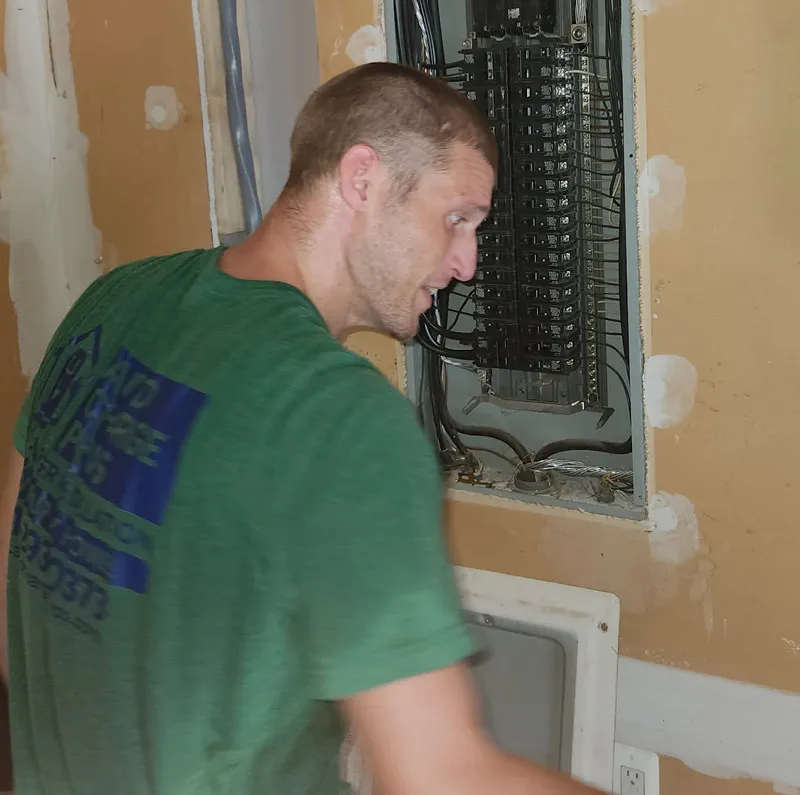
Auto Charge Pros provides professional Level 2 EV charger installation throughout Springfield and southern Fairfax County. Springfield includes established postwar neighborhoods, renovated single-family homes, townhomes, condominiums and association-managed communities, creating very different electrical-panel, garage and parking conditions from one property to another. We evaluate the electrical panel, available service capacity, charger requirements, parking location, wiring route and applicable property or permit requirements before recommending an installation. Owner and Virginia Master Electrician Nick Wilson personally performs the electrical work. No subcontractors.
01 / local installation plan
EV Charging for Established Springfield Homes
Springfield's central residential neighborhoods developed during the postwar growth of Northern Virginia. The area now contains original homes, expanded homes, finished basements and properties that have undergone multiple generations of remodeling. That history can affect EV charger installation because previous additions or renovations may change:
An established home does not automatically need a panel replacement. Existing equipment should be evaluated according to its condition, compatibility and available electrical capacity—not simply the age of the property.
- electrical-panel location
- framing direction
- accessible wiring paths
- household electrical demand
- garage configuration
- finished-space access
- original circuit organization
- available breaker space
02 / property and parking
Private Garages, Townhomes and Condominium Parking
Springfield properties do not share one standard garage, panel or parking arrangement. The charging plan follows the conditions of the home or managed property.
- SINGLE-FAMILY HOMES — A private attached garage may allow a relatively direct charging circuit, but a basement or interior electrical panel can create a longer route through finished areas.
- SPLIT-LEVEL AND MULTI-LEVEL HOMES — Changes in floor elevation, finished ceilings and framing direction can make the path from the panel to the garage less direct than the physical distance initially suggests.
- TOWNHOMES — Compact garages, shared walls, finished rooms above the garage and limited mounting space can affect circuit routing, charger placement and cable reach.
- CONDOMINIUMS AND MANAGED PROPERTIES — Assigned parking, common exterior walls, shared electrical equipment and property-management authorization can make a charging project substantially different from an installation inside a privately controlled garage.
03 / community requirements
Some Springfield Communities Have Their Own EV Charger Rules
Springfield does not have one master association controlling every property. Individual homeowner and condominium associations may maintain separate architectural standards, parking rules and EV charging policies. Newington Community Association is a useful local example. The Association publishes a specific Electric Vehicle Charging Station Policy and an EV charging-station application for applicable properties. Other Springfield-area communities may instead address EV charging through broader architectural-modification, parking or common-property rules.
Before exterior or common-property work is planned, homeowners should verify the property and community conditions that apply.
- whether the property is association-managed
- whether the garage or parking space is privately owned
- whether exterior walls are private or common
- whether the wiring route crosses common property
- whether visible conduit, equipment or pedestals require review
- whether the community has a specific EV charging policy or application
- whether insurance, maintenance or removal conditions apply
04 / condominium planning
A Condominium Charger Is More Than a New Breaker
Springfield contains established condominium communities where building exteriors, parking areas or utility systems may be common property. Cardinal Square is one local example of a townhouse-condominium community where building exteriors and parking areas are identified as common property. Other condominium communities can have different ownership and electrical arrangements.
Before proposing a condominium or common-parking installation, confirm the ownership, electrical, authorization and permit conditions that apply. Electrical feasibility does not by itself establish permission to perform work on common property.
- ownership of the parking space
- ownership of the garage or exterior wall
- ownership of the electrical panel
- whether electrical service is individually or commonly supplied
- whether common walls, ceilings or grounds are crossed
- association or property-management authorization
- responsibility for charging-energy costs
- maintenance and removal responsibilities
- applicable Fairfax County permit classification
05 / permit path
The Fairfax Permit Process Changes With the Property
For a typical EV charger installation at a single-family dwelling, Fairfax County states that a separate EVCS plan submission is generally not required. The applicable electrical permit is submitted through the County's Planning and Land Use System, known as PLUS. An installation on homeowner-association common property follows a different path. Fairfax County identifies HOA property as commercial property for EVCS permitting purposes. These projects can require plans, association coordination, onsite contacts and a commercial-style review process.
The permit classification depends on the property and where the equipment and wiring are located; not every townhouse follows the commercial permit process.
- PRIVATE SINGLE-FAMILY OR QUALIFYING TOWNHOUSE PROPERTY — applicable residential electrical permit; permit submitted through PLUS; no separate EVCS plan submission generally required for a typical single-family installation; project-specific inspection requirements.
- HOA OR COMMON-PROPERTY INSTALLATION — property can be treated as commercial for permitting; architectural or structural plans may be required; association and onsite contacts may be required; wiring, parking and common-property authorization must be documented; process can be substantially different from a private garage circuit.
06 / permits and inspections
Fairfax County EV Charger Permits in Springfield
Fairfax County requires an electrical permit when a new residential EV charging circuit or outlet is installed. A stand-alone charging unit plugged into an existing approved receptacle is treated differently from installing a new circuit, outlet or hardwired charger. Applicable electrical permit applications are submitted through PLUS. Springfield is an unincorporated Fairfax County community, not a separate municipal permit jurisdiction; applicable residential electrical permitting is handled through Fairfax County. When permitting is included in the written scope, Auto Charge Pros can prepare and submit the applicable electrical permit information and coordinate the inspection process.
- VIRTUAL AND IN-PERSON INSPECTIONS — Fairfax County currently performs both virtual and in-person building and trade inspections. A virtual inspection may be requested when scheduling, but the inspector determines whether the project is appropriate for remote inspection.
07 / finished-home routing
Routing the Circuit Through Finished Springfield Homes
The electrical panel may be located in the garage, a basement, utility room or another interior portion of the home. Established and remodeled properties can also contain framing changes that are not obvious from the garage alone. Potential routes may involve:
Auto Charge Pros evaluates the practical route before making access openings or automatically installing exposed conduit across finished surfaces. Where included in the written estimate, removed drywall may be securely fastened back after the required electrical work and inspection. Full finishing—including tape, compound and sanding—is available separately when requested unless specifically included in the written scope.
- basement ceiling cavities
- joist spaces
- unfinished storage or mechanical rooms
- wall cavities
- soffits and bulkheads
- vertical transitions between levels
- garage ceilings and walls
- short exterior sections where appropriate
08 / charging location
The Charging Location Should Match the Parking Arrangement
Not every Springfield property uses an enclosed private garage. Some homes and association-managed properties can involve carports, driveway parking or assigned exterior spaces. Charger-location planning should consider the way the vehicle is normally parked and how the cable will be used every day.
The shortest electrical route is not automatically the best charging location if it leaves the cable stretched across a garage doorway, parking path or pedestrian area.
- normal vehicle orientation and charge-port location
- cable reach and garage-door operation
- adjacent vehicle space and walking paths
- carport or exterior exposure
- cable storage and physical protection
- wall or pedestal mounting
- property-ownership boundaries
09 / capacity planning
Can the Existing Electrical System Support a 48-Amp Charger?
Available breaker spaces and available electrical capacity are not the same thing. A 200-amp service can still have substantial existing demand, while a smaller service may support an appropriate charging configuration depending on the actual household load.
Auto Charge Pros evaluates the service rating, existing household demand, panel condition, breaker compatibility, available breaker space, charger requirements and desired charging output. Evaluate first. Upgrade only when necessary.
- Full 48-amp charging where capacity supports it.
- Lower charging output when that better fits the available capacity or vehicle needs.
- Compatible EV load management.
- Tesla power sharing where applicable.
- A subpanel when breaker space is the actual limitation.
- Panel, feeder or service upgrades when genuinely required.
10 / charger selection
Tesla and Level 2 Charger Installation in Springfield
Auto Charge Pros installs Tesla Wall Connector, Tesla Universal Wall Connector, Emporia, ChargePoint, BMW, Rivian-compatible charging equipment and other listed Level 2 chargers. A charger configured for 48 amps typically requires an appropriately designed 60-amp dedicated circuit when the equipment, vehicle capability, wiring method and available electrical capacity support that output.
Charger selection and configuration should reflect vehicle charging capability, available electrical capacity, normal driving needs, parking orientation, circuit distance, property type and association conditions where applicable. Vehicle charging capability is confirmed before output is set.
11 / installation process
How We Plan a Springfield EV Charger Installation
Each project moves from property and capacity review to an installation plan that accounts for the equipment, vehicle and applicable property requirements.
- PROPERTY AND PARKING REVIEW — Identify whether the charger serves a private garage, carport, driveway, townhouse, condominium or common-property parking area.
- PANEL AND CAPACITY EVALUATION — Nick reviews the service, panel, breaker space and existing household demand to determine an appropriate charging output.
- ROUTE PLANNING — Identify a practical circuit path through finished, unfinished or exterior areas and discuss expected access.
- PROPERTY AND PERMIT REQUIREMENTS — Confirm applicable association authorization and whether the project follows a standard residential or HOA/common-property permit path.
- ELECTRICAL INSTALLATION — Nick installs the dedicated circuit and hardwired charger or approved charging receptacle, configures supported settings and tests the equipment.
- INSPECTION AND COMPLETION — Coordinate the applicable Fairfax County inspection and complete restoration included in the written estimate.
12 / residential electrical services
Residential Electrical Services in Springfield
In addition to EV charging, Auto Charge Pros provides focused residential electrical work in Springfield.
- electrical troubleshooting
- panel and subpanel work
- dedicated circuits
- outlets and switches
- indoor and outdoor lighting
- whole-home surge protection
- GFCI and AFCI work
- smoke and CO alarm wiring
- smart-device electrical wiring
13 / installation cost
What Affects EV Charger Installation Cost in Springfield?
Cost depends on the electrical and property conditions that the installation has to address. A charger installed beside a suitable panel in a private garage is a different project from a circuit routed through a finished split-level home or equipment serving association-controlled parking. Auto Charge Pros prices the actual electrical and property conditions.
The estimate accounts for the route, the equipment and the permissions or electrical changes required for the specific installation.
- Property type and whether parking is private or common determine the access, ownership and coordination involved.
- Electrical capacity, panel location, charger output and circuit distance affect equipment, conductor and labor needs.
- Finished-space access and multi-level routing can add careful access planning or restoration.
- Garage, carport or outdoor locations change mounting, exposure protection and cable-management requirements.
- HOA or condominium requirements and the residential versus common-property permit path can add documentation and coordination.
- Load-management equipment, panel or subpanel work and optional drywall restoration affect the final scope.
14 / questions homeowners ask
Springfield EV charger questions
Does Fairfax County require a permit for a Springfield EV charger?+
Yes, when a new EV charging circuit or outlet is installed. For a typical single-family dwelling, Fairfax County generally requires the electrical permit through PLUS without a separate EVCS plan submission.
Is the permit process different for an HOA or common-parking installation?+
Yes. Fairfax County identifies HOA property as commercial for EVCS permitting purposes. Plans, association coordination and a different permit path may be required.
Does Newington Community Association have an EV charger policy?+
Yes. Newington Community Association publishes an EV charging-station policy and application for applicable properties. Other Springfield associations may use different requirements.
Can you install a charger at a Springfield condominium?+
Potentially. Parking ownership, electrical-source ownership, common-property boundaries, association approval and permit classification must be established before the installation is finalized.
Can wiring be concealed through a split-level or finished basement?+
Often, depending on framing and accessible pathways. Auto Charge Pros evaluates the route before installation, but completely concealed wiring cannot be guaranteed for every property.
Does an older Springfield home automatically need a panel upgrade?+
No. Panel condition, breaker space and available electrical capacity should be evaluated first. Lower charging output or compatible load management may be alternatives when full-rate charging is not appropriate.
15 / service area
Serving Springfield, Virginia
Auto Charge Pros provides residential EV charger installation and electrical services throughout Springfield and surrounding Fairfax County communities. Each installation is planned around the property's electrical system, parking arrangement, ownership conditions and applicable Fairfax County permit path.
Ready when you are
Plan the right
charge at home.
Call or text 571-293-0373 or email Service@AutoChargePros.com for a clear estimate from Nick Wilson for your Springfield home.