
FAIRFAX COUNTY / ANNANDALE
EV Charger Installation & Electrician in Annandale, Virginia
Auto Charge Pros provides professional Level 2 EV charger installation throughout Annandale and central Fairfax County. Annandale's established detached neighborhoods, renovated homes, townhouses and garden-style condominium communities create very different electrical-panel, garage and parking conditions from one property to another. We evaluate the electrical panel, available service capacity, charger requirements, normal parking location, wiring route and applicable property or permit requirements before recommending an installation. Owner and Virginia Master Electrician Nick Wilson personally performs the electrical work. No subcontractors.
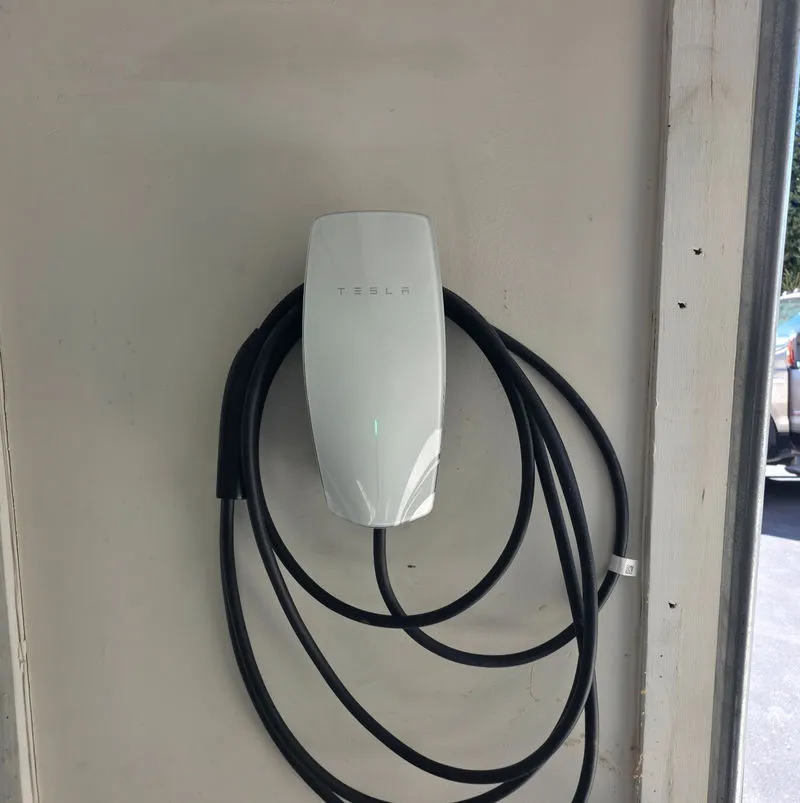
01 / local installation plan
EV Charging for Established Annandale Homes
Much of Annandale consists of established detached-home neighborhoods. Fairfax County planning documents identify communities such as Broyhill Crest, Columbia Pines and Sleepy Hollow Woods among the area's stable single-family residential neighborhoods. The housing stock includes established ramblers and split-levels alongside renovated homes, additions, basement finishes, garage modifications and multiple generations of electrical work. Those conditions can affect EV charger installation.
An established home does not automatically need a panel replacement. Existing equipment should be evaluated based on condition, compatibility and available electrical capacity rather than age alone.
- electrical-panel location
- framing direction
- access through finished spaces
- household electrical demand
- breaker compatibility
- garage configuration
- driveway or carport charging options
- practical circuit routing
02 / parking and placement
When the Vehicle Is Not Parked Beside the Electrical Panel
Not every Annandale property has a modern two-car garage with an electrical panel mounted nearby. Depending on the home, the vehicle may be parked in an attached garage, beneath a carport or in a private driveway. These arrangements create different charging plans.
The closest wall to the panel is not automatically the most useful charger location. Placement should work with the way the vehicle is parked and charged every day.
- PRIVATE GARAGE — A charger inside a privately controlled garage may allow concealed routing and protection from direct weather exposure.
- CARPORT — A carport installation can require weather-rated equipment, appropriate wiring protection and a mounting location that does not interfere with parking or walking paths.
- DRIVEWAY — An exterior wall or driveway-side charger must be positioned around vehicle orientation, charge-port location, cable reach, weather exposure and physical protection.
- GARAGE ADDITIONS OR CONVERSIONS — A garage that was added, enclosed or remodeled later may not follow the original framing or electrical layout of the house.
03 / housing and electrical context
Detached Homes, Townhouses and Garden-Style Condominiums
Annandale includes primarily detached single-family residential neighborhoods, along with some townhouse development near major roads and garden-style apartments and condominiums near the Annandale Community Business Center. The housing type changes the available route, parking control and electrical authorization questions.
- DETACHED SINGLE-FAMILY HOMES — A basement or interior electrical panel may require the new circuit to pass through finished ceilings, joist spaces or utility areas before reaching a garage or exterior wall.
- TOWNHOUSES — Compact garages, shared walls, finished rooms above the garage and limited mounting space can affect both circuit routing and charger placement.
- GARDEN-STYLE CONDOMINIUMS — Properties near the Annandale Community Business Center include garden-style condominium and multifamily development. Assigned parking, common exterior walls and shared electrical infrastructure can make these projects substantially different from a private garage installation.
- RENOVATED OR INFILL PROPERTIES — Additions, basement finishes and newer infill construction can create electrical systems and framing routes that differ from surrounding homes, even within the same neighborhood.
04 / common-property planning
Common Parking Requires More Than Electrical Capacity
A charger serving condominium, association-controlled or common parking can involve property ownership and authorization questions in addition to electrical design. Before proposing common-property work, confirm the physical and administrative conditions for the installation.
Electrical feasibility does not establish permission to install equipment on common property.
- ownership of the parking space
- whether the garage or parking area is private or common
- ownership of the electrical panel
- whether the wiring route crosses common walls, ceilings or grounds
- association or property-management authorization
- responsibility for the charging-energy cost
- equipment maintenance and removal responsibilities
- applicable Fairfax County permit classification
- whether architectural or site plans are required
05 / permit path
The Permit Path Depends on Where the Charger Is Installed
For a typical EV charger installation at a single-family dwelling, Fairfax County states that a separate EVCS plan submission generally is not required. The applicable electrical permit is submitted through the County's Planning and Land Use System, known as PLUS. An installation on homeowner-association or common property can follow a different process. Fairfax County treats HOA property as commercial property for EV charging permit purposes and may require plans, association contacts and additional zoning or site documentation.
The permit classification depends on the actual ownership and location of the equipment and wiring. A townhouse does not automatically follow the HOA commercial-property path.
- PRIVATE SINGLE-FAMILY PROPERTY — Electrical permit through PLUS for a new circuit or outlet; no separate EVCS plan submission generally required for a typical single-family installation; project-specific inspection requirements; private garage or driveway under the homeowner's control.
- HOA OR COMMON-PROPERTY INSTALLATION — Commercial-style permit treatment may apply; architectural or structural plans may be required; association and onsite contacts may be required; zoning or charging-space documentation may be required; wiring and equipment location must be authorized; sidewalk or common-parking conditions may require additional planning.
06 / pedestrian access
A Charging Cable Should Not Become a Walkway Obstruction
Exterior and common-parking installations require careful consideration of the space between the charging equipment and the vehicle. Fairfax County does not permit charging equipment or charging-cable obstructions in a public right-of-way. Cable crossings on privately owned property depend on property-owner or association authorization and must be planned around safe use of the walking area.
A charger should not be located in a way that routinely requires the cable to cross a public sidewalk, garage doorway or primary walking route.
- public versus private sidewalk
- routine pedestrian paths
- cable reach
- vehicle orientation
- cable storage
- accessible travel
- physical protection
- drainage where a permanent crossing system is proposed
- property-owner or association approval
07 / wiring route
Routing the Charging Circuit Through Finished Annandale Homes
The electrical panel may be located in the garage, basement, utility room or another interior portion of the home. Additions and previous remodeling can also change the framing path between the panel and the charging location. Potential routes should be reviewed before the installation plan is finalized.
Auto Charge Pros evaluates the practical route before making access openings or automatically installing exposed conduit across finished surfaces.
Where included in the written estimate, removed drywall may be securely fastened back after the required electrical work and inspection. Full finishing—including tape, compound and sanding—is available separately when requested unless specifically included in the written scope.
- finished basement ceilings
- joist cavities
- wall cavities
- soffits or bulkheads
- unfinished storage or mechanical rooms
- vertical transitions between levels
- garage ceilings and walls
- short exterior sections where appropriate
08 / capacity planning
Can an Annandale Home Support a 48-Amp Charger?
Available breaker spaces and available electrical capacity are not the same thing. A 200-amp main breaker does not automatically mean unlimited capacity remains for EV charging. Likewise, an established home with a smaller service may still support an appropriate Level 2 charging configuration depending on its actual household demand.
Auto Charge Pros evaluates the service rating, existing household demand, panel condition, breaker compatibility, available breaker space, charger requirements, requested charging output and major household electrical loads.
Evaluate first. Upgrade only when necessary.
- full 48-amp charging where electrical capacity supports it
- lower charging output
- compatible EV load management
- Tesla power sharing where applicable
- a subpanel when breaker space is the actual limitation
- panel, feeder or service upgrades when genuinely required
09 / charger selection
Tesla and Level 2 Charger Installation in Annandale
Auto Charge Pros installs Tesla Wall Connector, Tesla Universal Wall Connector, Emporia, ChargePoint, BMW, Rivian-compatible charging equipment and other listed Level 2 chargers. A charger configured for 48 amps typically requires an appropriately designed 60-amp dedicated circuit when the equipment, vehicle capability, wiring method and available electrical capacity support that output.
Vehicle charging capability is confirmed before output is set. Charger selection and configuration should reflect vehicle charging capability, available service capacity, daily driving needs, parking orientation, cable reach, circuit distance, indoor versus outdoor location and multiple-EV needs where applicable.
10 / Fairfax permitting
Fairfax County EV Charger Permits in Annandale
Fairfax County requires an electrical permit when a new residential EV charging circuit or outlet is installed. A stand-alone charging unit plugged into an existing approved receptacle is treated differently from adding a new circuit, outlet or hardwired charger. Applicable permit applications are submitted through Fairfax County's PLUS system. For a typical single-family dwelling, Fairfax County states that no separate EVCS plan submission generally is required beyond the applicable electrical permit.
When permitting is included in the written scope, Auto Charge Pros can submit the applicable electrical permit information and coordinate the inspection process.
VIRTUAL AND IN-PERSON INSPECTIONS — Fairfax County currently conducts both virtual and in-person building and trade inspections. A virtual inspection may be requested through PLUS, but the inspector decides whether remote inspection is appropriate for the individual project.
11 / installation process
How We Plan an Annandale EV Charger Installation
Each installation is planned from the actual property, parking arrangement, electrical system and applicable permit path.
- PROPERTY AND PARKING REVIEW — Identify whether the charger serves a private garage, carport, driveway, townhouse, condominium or common parking location.
- PANEL AND CAPACITY EVALUATION — Nick reviews the service, panel, breaker space and existing household demand to determine an appropriate charging output.
- ROUTE PLANNING — Identify a practical circuit path through finished, unfinished or exterior areas and discuss anticipated access.
- PROPERTY AND PERMIT REQUIREMENTS — Confirm whether association or property-management authorization applies and whether the project follows a standard residential or common-property permit path.
- ELECTRICAL INSTALLATION — Nick installs the dedicated circuit and hardwired charger or approved charging receptacle, configures supported equipment settings and tests operation.
- INSPECTION AND COMPLETION — Coordinate the applicable Fairfax County inspection and complete any restoration included in the written estimate.
12 / residential electrical services
Residential Electrical Services in Annandale
Residential electrical services can include electrical troubleshooting; panel and subpanel work; dedicated circuits; outlets and switches; indoor and outdoor lighting; whole-home surge protection; GFCI and AFCI work; smoke and carbon-monoxide alarm wiring; and smart-device electrical wiring. EV charging remains the focus, with related work scoped to the actual electrical need.
13 / project cost factors
What Affects EV Charger Installation Cost in Annandale?
A charger installed beside a suitable garage panel is a different project from a circuit routed through a finished basement or equipment serving a condominium parking area. Auto Charge Pros prices the actual electrical and property conditions.
- PRIVATE GARAGE, CARPORT, DRIVEWAY OR COMMON PARKING — Parking control, weather exposure, mounting and authorization change the installation plan.
- PANEL LOCATION AND ELECTRICAL CAPACITY — Distance, existing household demand, breaker compatibility and service limitations affect circuit design.
- CIRCUIT DISTANCE AND FINISHED-SPACE ACCESS — Longer routes or access through finished basements and multiple levels can require more labor and restoration planning.
- CHARGER OUTPUT — Higher requested output can affect conductor sizing, overcurrent protection and capacity planning.
- INDOOR VERSUS OUTDOOR INSTALLATION — Exterior equipment needs appropriate rating, mounting and physical protection.
- COMMON-PROPERTY OR ASSOCIATION REQUIREMENTS — Authorization, plans, documentation and permit classification may add project coordination.
- LOAD-MANAGEMENT, PANEL OR SUBPANEL WORK — Additional equipment or electrical work is scoped only when the evaluation shows it is needed.
- OPTIONAL DRYWALL RESTORATION AND PHYSICAL PROTECTION — Access restoration, cable protection and mounting conditions are identified in the written estimate.
14 / questions homeowners ask
Annandale EV charger questions
Does Fairfax County require a permit for an Annandale EV charger?+
Yes, when a new charging circuit or outlet is installed. For a typical single-family dwelling, Fairfax County generally requires the applicable electrical permit through PLUS without a separate EVCS plan submission.
Is the permit process different for a condominium or HOA parking area?+
It can be. Fairfax County treats HOA property as commercial for EVCS permitting purposes. Plans, association contacts and additional zoning or site documentation may be required.
Can you install an EV charger if my Annandale home has a carport or driveway instead of an enclosed garage?+
Potentially. The equipment rating, mounting location, wiring route, cable reach, weather exposure and property ownership must be evaluated.
Can you install a charger at an Annandale condominium?+
Potentially. Parking ownership, electrical-source ownership, common-property boundaries, property authorization and permit classification must be confirmed first.
Can wiring be concealed through an older or finished home?+
Often, depending on framing and accessible pathways. Auto Charge Pros evaluates the route before installation, but completely concealed wiring cannot be guaranteed for every property.
Does an established Annandale home automatically need a panel upgrade?+
No. Panel condition, breaker compatibility, breaker space and available electrical capacity are evaluated first. Lower charging output or compatible load management may be alternatives when full-rate charging is not appropriate.
15 / service area
Serving Annandale, Virginia
Auto Charge Pros provides residential EV charger installation and electrical services throughout Annandale and surrounding Fairfax County communities. Each installation is planned around the property's electrical system, housing type, parking arrangement and applicable Fairfax County permit path.
Ready when you are
Plan the right
charge at home.
Call or text 571-293-0373 or email Service@AutoChargePros.com for a clear estimate from Nick Wilson for your Annandale home.